
Foundational
What are microplastics?
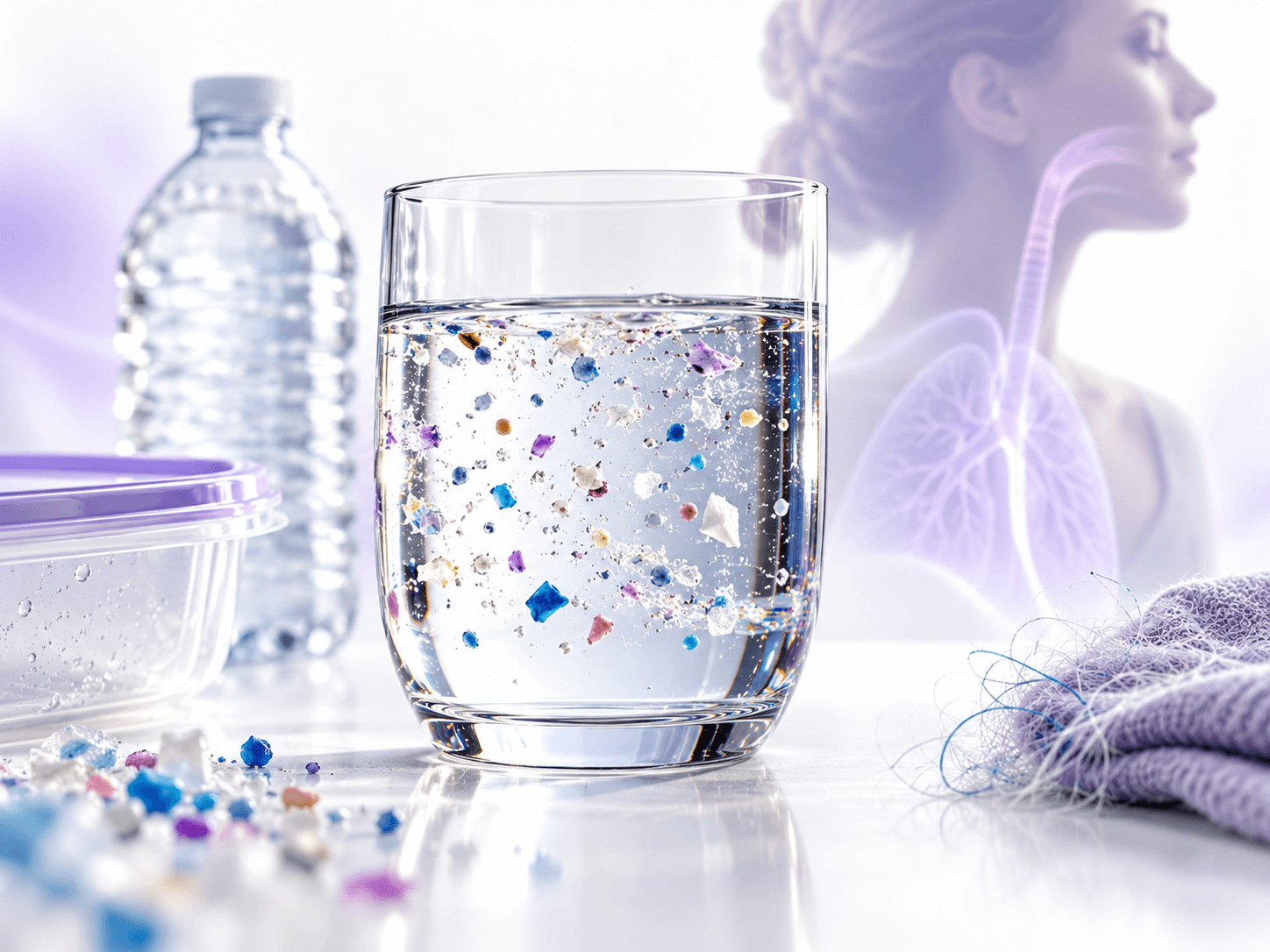
Microplastics generally refers to very small plastic particles created when larger plastics break down over time. They can come from common materials and consumer products, and they can persist in the environment.
Not one single substance
Microplastics can differ by polymer type, size, shape, and additives.
A rapidly evolving field
Researchers are still refining methods, definitions, and what different measures mean.
Origins
Where do they come from?
Microplastics can originate from the breakdown of everyday plastics and materials. Examples include packaging, synthetic textiles, abrasion from consumer goods, and particles moving through built environments.
Wear and breakdown
Larger plastics degrade into smaller fragments.
Synthetic fibers
Some textiles can shed fine fibers over time.
Everyday pathways
Particles can move through air, dust, water, and packaging.
Pathways
How exposure happens
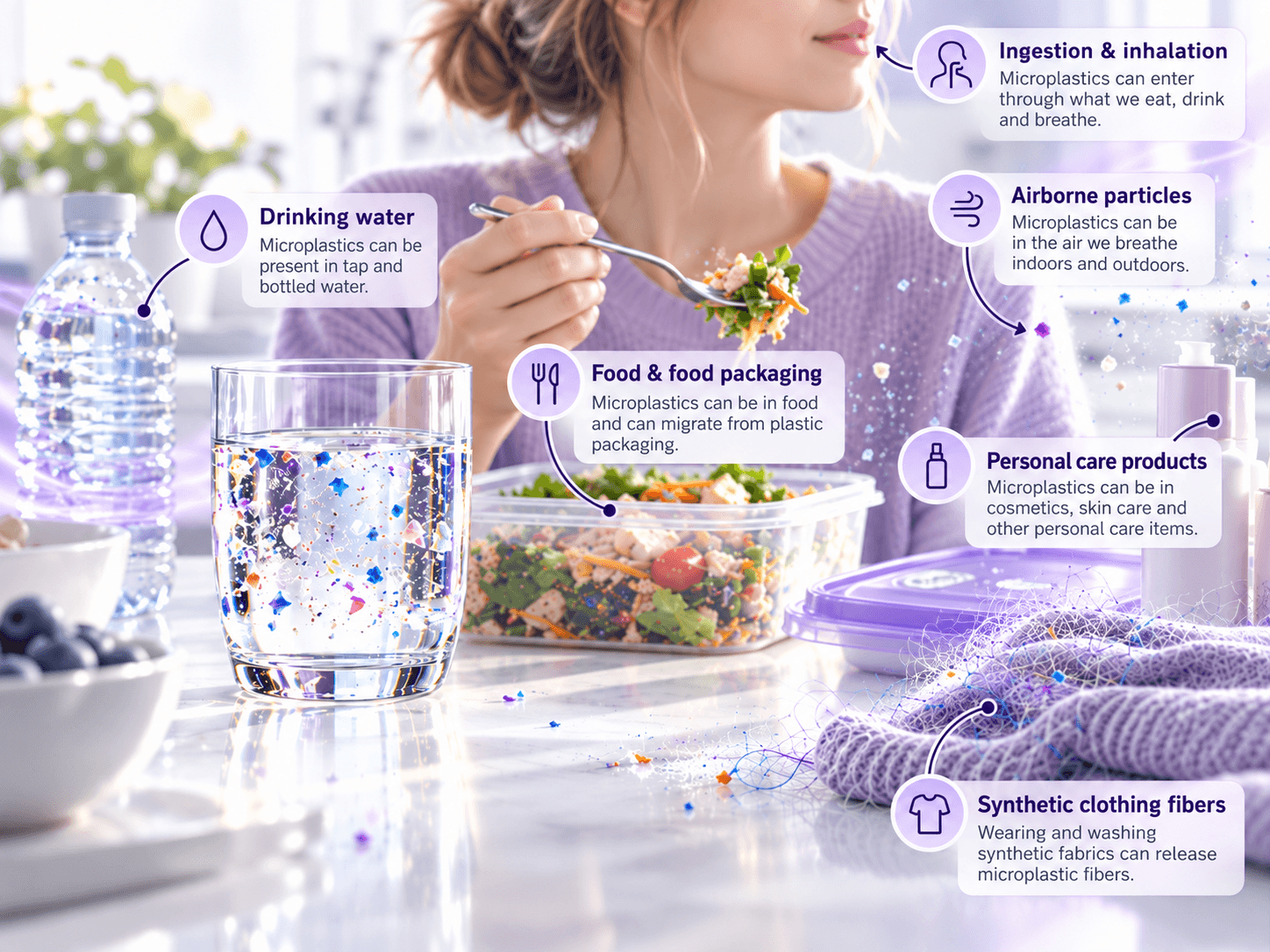
Exposure can occur through multiple pathways. Research often discusses inhalation and ingestion as common mechanisms being studied.
Inhalation
Airborne particles and household dust are actively studied as potential exposure sources.
Ingestion
Food and water pathways are also studied, including packaging and environmental contamination.
Interpretation
Different particle sizes and polymer types may behave differently, so measurement context matters.
Research-aware
What research is studying
This area is expanding quickly. Researchers are studying where microplastics can be detected, how to measure them reliably, and what correlations may exist with other findings.
Methods
How labs identify, quantify, and classify particles with consistent standards.
Detection
Where microplastics have been detected and what that may or may not imply.
Context
How results can be reviewed as data inside a broader health or wellness picture.
Add current references here as the scientific library is finalized: peer-reviewed studies, method papers, and authoritative reviews.
Practical
Why measurement matters
In a developing research area, measurement can be a starting point: it replaces guesswork with data. The goal is clarity and informed decision-making without hype.
Baseline
Know where you are starting from.
Trend tracking
Assess changes over time with consistent methods.
Clinical context
Share results with a provider when appropriate.
Quick questions
A few fast clarifications
Does PlasticTox diagnose disease?
No. PlasticTox provides structured laboratory analysis. It is not a diagnostic test and does not promise outcomes.
Why test now?
Awareness is rising and research is accelerating. Testing can provide a clearer starting point than speculation.
Ready for measurement?
Replace guesswork with structured results.
PlasticTox does not diagnose disease or claim outcomes. It provides structured analysis in an evolving research field.